Ridgeway Plaza: Complete Missi
Ridgeway Plaza is one of Mississauga’s best-known food and community destinations. Located in west Mississauga, it includes…

Latest Updates
September 18, 2026

September 15, 2026
September 15, 2026
September 11, 2026
Guides & Resources

Ridgeway Plaza is one of Mississauga’s best-known food and community destinations. Located in west Mississauga, it includes…

Eid al-Fitr: The Joyous Reward After Ramadan A Celebration of Gratitude, Unity, and JoyEid al-Fitr, often referred…

Cheese finds its way into almost every kind of meal: a slice of cheddar in a sandwich,…
What if your next favorite comfort food came from across the globe—but felt like home? Middle Eastern…
A Middle Eastern Legend bringing authentic flavors to your table
A halal sign can mean very different things. This guide explains the difference between a restaurant’s own halal claim, certified meat from a supplier, restaurant-level certification, and ongoing halal monitoring in Canada.
Published August 30, 2026 • Updated September 10, 2026

Walk through almost any Canadian city with a large Muslim community and you will see the word Halal on restaurant windows, menus, websites and delivery apps. But those signs do not necessarily mean the same thing.
A better question is: How is the halal claim verified? A generic sticker, a halal-certified meat supplier, and an independently monitored restaurant are three different levels of assurance.
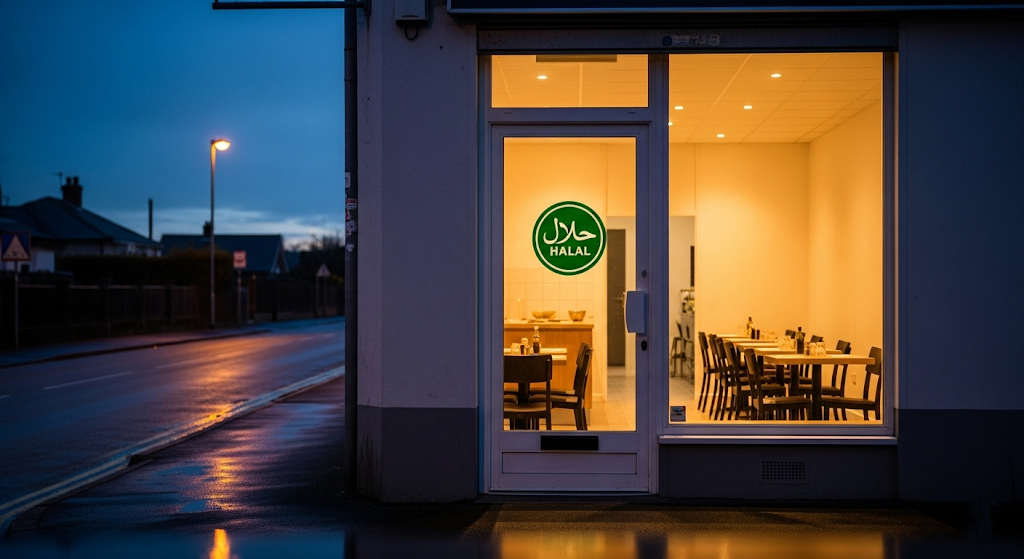
A restaurant may genuinely buy halal meat and display a generic halal sign. Another restaurant may have its entire operation inspected and certified by a halal authority. Both may use the word “halal,” but the evidence behind the claim can be very different.
A generic halal decal that anyone can print or purchase should not be confused with the protected certification mark of an organization that has actually inspected and approved the establishment.
There is no useful consumer definition of “100% halal” unless we first explain what exactly is being verified. For one business, it may mean every meat item comes from a halal supplier. For another, it may mean the entire restaurant is monitored: meat, ingredients, sauces, storage, preparation, supplier changes and cross-contamination controls.
| Level | What It Usually Means | What It Does Not Automatically Prove |
|---|---|---|
| Halal claim | The restaurant says its food or meat is halal. | Independent inspection, supplier traceability or ongoing monitoring. |
| Certified halal supplier | The restaurant purchases meat from a supplier whose product is halal-certified. | That the restaurant itself, its ingredients or kitchen procedures are certified. |
| Restaurant certification | A certification body has inspected the establishment against its own halal standard. | That every certifier follows exactly the same religious standard. |
| Ongoing monitoring | The certifier continues checking compliance after approval. | That consumers must personally follow that certifier’s interpretation. |
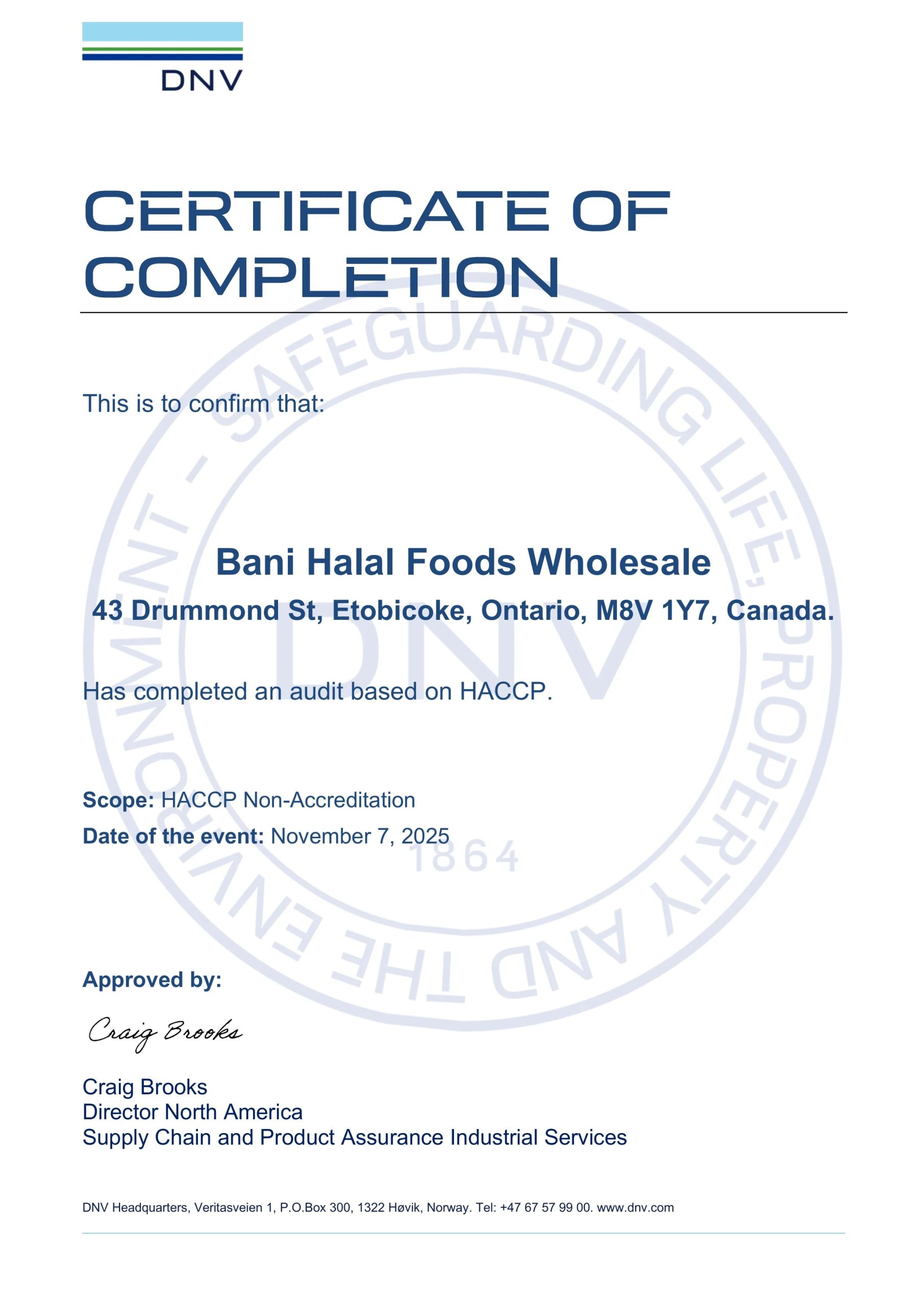
This distinction is one of the most important for diners. A supplier certificate can establish that a particular meat product was certified before it reached the restaurant. It does not automatically verify every ingredient, how products are stored, whether suppliers later change, or how food is handled inside the kitchen.
Some certifiers distinguish between supplier certification and full restaurant certification, and some continue monitoring after approval. For how that ongoing oversight works, see What Is a Halal Monitoring Authority?.
The Canadian Food Inspection Agency states that when food is labelled, packaged or advertised as halal, the name of the person or body that certified the food as halal must be indicated where the claim is made. The agency also says halal claims, like other food claims, must be truthful and not misleading. See the CFIA guidance on method-of-production claims.
A halal sign can communicate a business’s claim. Verification tells the consumer what is behind that claim.
Organizations such as the Halal Monitoring Authority (HMA), ISNA Halal and Halal Inspection & Certification Canada (HIC Canada) provide religious certification services under their own standards. They inspect businesses, issue certificates and maintain their own compliance programs. Canada does not have one single government religious standard that every halal restaurant must follow.
Consumers may also care about the certifier itself because organizations can differ in slaughter rules, ingredient policies, audit frequency and recognition. This article focuses on what a sticker or certificate proves; for organization-by-organization differences, use THF’s halal certification organizations in Canada comparison.
Certification requires inspectors, audits, administration, documentation and follow-up. HMA currently says its restaurant program has a $200 application fee and an average monthly certification cost of about $250, covering regular inspections, administration and marketing support.
A small Muslim-owned restaurant may buy only certified halal meat and take halal sourcing seriously while deciding that formal restaurant certification is unnecessary or too expensive. The lack of restaurant-level certification should not automatically be treated as proof that the food is haram.
Certification organizations therefore do have a business interest in encouraging more restaurants to become certified. That financial reality should be acknowledged openly. But it does not make certification meaningless. The useful question is whether the organization provides transparent standards, meaningful inspection, traceability, a public directory and continuing monitoring.
Some restaurants serve only halal-certified meat but also sell alcoholic beverages. Others serve pork and non-halal products while offering selected halal proteins. Some use separate preparation areas; others do not. Muslim consumers do not all apply the same personal threshold in these situations.
The goal should not be to turn every meal into an investigation or to publicly accuse restaurants without evidence. It should be transparency. A business owner’s statement can carry trust. A supplier certificate adds another layer. Independent restaurant certification adds another. Ongoing monitoring adds another. This demand for proof reflects the rise of halal-conscious consumers in Canada.
A halal sticker can start the conversation. It should not have to end it.
THF takeaway: Consumers are better served when restaurants clearly disclose whether they are self-declared halal, use a verified halal supplier, hold restaurant-level certification, or participate in an ongoing monitoring program. Those descriptions communicate more useful information than one generic “Halal” badge.