What Spices Are Most Common in Halal Cooking?
Spices are the heartbeat of Halal cuisine. They do more than just add color; they tell the…

Latest Updates



October 1, 2026

Guides & Resources
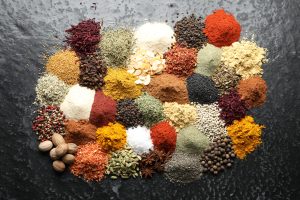
Spices are the heartbeat of Halal cuisine. They do more than just add color; they tell the…

Canada’s halal food industry is often measured by the number of restaurants, products and grocery aisles carrying…

The Blueprint for Success: Launching Your Halal Food Business in Canada The Halal food sector in Canada…
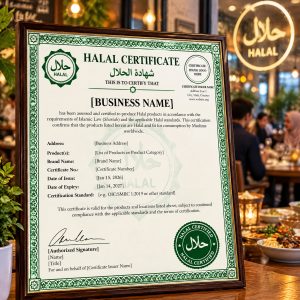
"Halal Certified" is a label given to food products or restaurants that have been approved by a…
What is a halal monitoring authority? Learn how ongoing halal monitoring works, what inspectors check, and how monitoring differs from the initial certification decision.
Published September 10, 2026 • Updated October 5, 2026

A halal monitoring authority is an organization that inspects and verifies whether products, ingredients, facilities and services comply with defined Islamic halal requirements. A halal certification authority may issue the formal certificate, while monitoring describes the continuing checks used to make sure those standards remain in place.
In practice, the same organization often performs both roles. It may review ingredients, inspect production, approve suppliers, supervise slaughter where applicable, issue a halal certificate and then continue checking the business during the certification period.
Quick answer: Halal certification is the formal approval. Halal monitoring is the ongoing supervision behind that approval. A strong certification program does not simply inspect once and disappear; it defines what is certified and has a system for checking continued compliance.
A halal certification authority looks beyond a halal logo or marketing claim. Depending on the product and the certifier's standards, the review may cover ingredient sources, recipes, processing aids, sanitation materials, suppliers, equipment, storage, segregation, packaging, traceability and production records.
For meat and poultry, the scope can also include the animal, slaughterer, invocation, slaughter method, stunning policy, supervision and separation from non-halal products. This is why two foods labelled halal may have been certified under different standards.
Once the requirements are met, the organization can approve a defined scope—such as a facility, product line, restaurant or group of products—and authorize use of its certification mark.

| Term | What it means | What consumers should look for |
|---|---|---|
| Halal certification | Formal approval that a defined product, facility or service meets the certifier's halal standard. | Certifier name, valid certificate, scope and expiry date. |
| Halal monitoring | Ongoing checks after approval to confirm that ingredients, suppliers and practices continue to comply. | Regular oversight, current listings and continued traceability. |
| Self-declared halal claim | A business states that something is halal without necessarily showing independent certification. | Ask who certified it and what exactly is covered. |
The distinction matters because businesses change. A restaurant can switch suppliers. A manufacturer can reformulate a product. A processing plant can change equipment or procedures. Monitoring is the mechanism intended to catch changes that may affect halal status.

For processed foods, auditors may investigate ingredients that are not always straightforward from the name alone—for example gelatin, enzymes, emulsifiers, flavour carriers, glycerin, shortening and other materials that can have animal or alcohol-related sources.
They may also inspect production lines, shared equipment, cleaning procedures, receiving areas, warehouses and packaging. The goal is to understand not only what goes into the product, but also what the product may come into contact with before it reaches the consumer.
For slaughter and meat processing, requirements can be significantly more detailed. See our guide to hand-slaughtered vs. machine-slaughtered halal meat for the main differences consumers encounter.
Photo: Arno Senoner via Unsplash.
A certificate is useful only when you know what it covers. A consumer or business checking halal certification should look for the name of the certifying organization, the certified company or facility, the covered products or activities, the certificate number where applicable, and the issue and expiry dates.
For restaurants, an important question is whether the entire establishment is certified or whether the restaurant simply purchases certain meat from a halal-certified supplier. Those are not the same claim.
For more detail, read Halal Sticker vs. Halal Certificate in Canada.
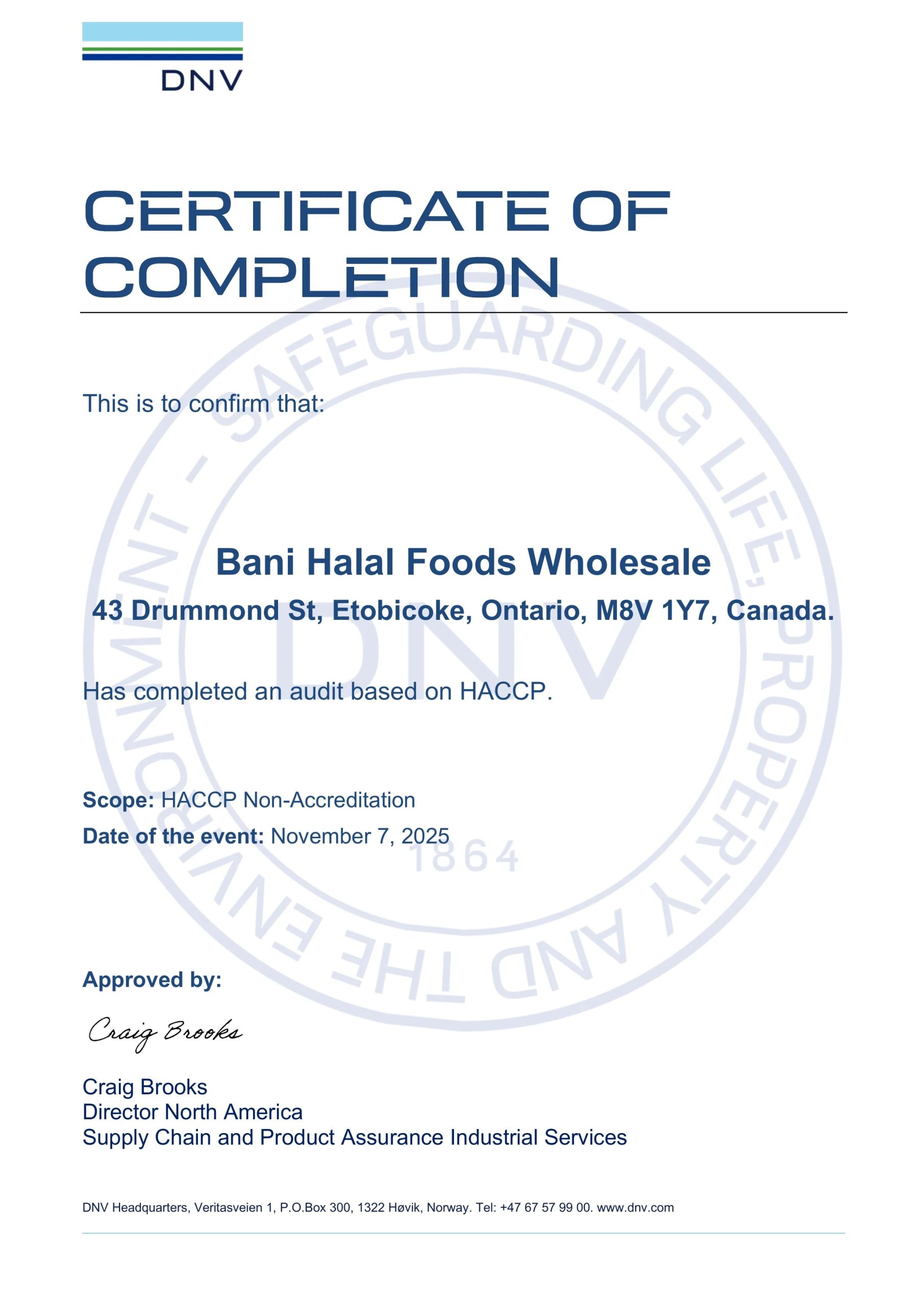

Monitoring can include scheduled audits, unannounced visits, supplier checks, ingredient approvals, traceability reviews and supervision at critical stages of production. The exact model depends on the certifier and the type of business.
A slaughterhouse needs a different level of oversight than a bakery using only pre-approved ingredients. Likewise, a large manufacturer supplying several countries may require more documentation than a single restaurant location.
The important point is that certification should have a defined system behind it—not simply a logo placed on a door or package.
Photo: TECNIC Bioprocess Solutions via Unsplash.
In Canada, Halal Monitoring Authority (HMA Canada) is also the name of a specific halal certification organization. HMA describes its system as monitoring the supply chain from slaughterhouses and processing plants through distributors and certified retail outlets.
According to HMA's published process, inspectors supervise slaughter operations, verify ingredients and segregation at processing facilities, and conduct regular and sometimes unannounced inspections at certified outlets.
That makes HMA a useful real-world example of the difference between simply issuing a certificate and operating an ongoing monitoring program.

Canada has a specific labelling rule for halal claims. The Canadian Food Inspection Agency states that when a food is represented as halal on a label, package or advertisement, the name of the person or body that certified the food as halal must be indicated. The halal claim must also be truthful and not misleading.
This is an important reason to look for the name of the certifier, not only the word halal or an unfamiliar logo. A recognizable certifying body gives consumers something they can independently check.
There is no single private halal certification organization that every Muslim, business and country uses. Certifiers can differ in scholarly interpretation, slaughter requirements, stunning policies, mechanical slaughter rules, ingredient assessment, audit frequency and international recognition.
That does not mean the word halal has no meaning. It means consumers who follow a particular standard should identify who certified the product and what that certifier requires. Businesses seeking certification should also consider whether the chosen organization is accepted by their customers and, when relevant, their export markets.
The Halal Food maintains a separate comparison of top halal certification organizations in Canada, including HMA Canada, ISNA Halal, IFANCC, CHFCA, Canadian Halal Bureau and other certification bodies.
1. Identify the certifier. Look for the full name of the organization, not only a generic halal symbol.
2. Check the certificate or official listing. Confirm that the business, facility or product appears in the certifier's current records where a public directory is available.
3. Check the scope. A certificate may apply to only one facility, one product line or certain menu items.
4. Check the date. Certification can expire, so an old certificate on social media does not necessarily prove current certification.
5. Ask a precise question. For restaurants, ask whether the whole restaurant is certified or which meat supplier and certifier they use.
Often, yes. Many organizations both certify and monitor. The difference is functional: certification is the approval decision, while monitoring is the ongoing supervision used to maintain confidence in that approval.
Yes. In Canada, HMA commonly refers to Halal Monitoring Authority Canada, a specific certification and monitoring organization established by the Canadian Council of Muslim Theologians.
Not by itself. Consumers should identify the organization behind the mark and verify that the certificate or listing is current and covers the product or business in question.
Look for a clearly identified organization, published standards, a verifiable certificate or public listing, defined scope, current dates and a process for inspections or ongoing compliance. If you want to compare specific Canadian organizations, use our halal certification organizations in Canada guide.
A halal certification authority verifies compliance with its halal standard and issues approval for a defined scope. A halal monitoring authority emphasizes what happens after that approval: continued oversight, inspections and verification. For consumers, the most useful question is not simply “Is it halal?” but “Who certified it, what does the certificate cover, and is it still valid?”
What Is Halal Certification? · Halal Certification Organizations in Canada · How to Get Halal Certification in Canada · Halal Sticker vs. Halal Certificate
Primary references: Canadian Food Inspection Agency — Method of Production Claims; Halal Monitoring Authority Canada — Certification and Monitoring Process; HMA Canada — About HMA.