What is Eid al-Adha?
What is Eid al-Adha? The Festival of Sacrifice and Devotion While Eid al-Fitr marks the end of…

Latest Updates


October 1, 2026

Guides & Resources
What is Eid al-Adha? The Festival of Sacrifice and Devotion While Eid al-Fitr marks the end of…

Archive: This article covers the 2025 Toronto Halal Bites Festival. The dates have passed; the original report…
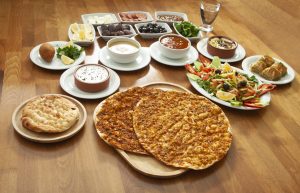
Halal isn’t just a rule—it’s a multi-culture flavors. In Canada—one of the world’s most diverse nations—halal food…

View this post on Instagram A post shared by Dr. Elzahraa Hassane | Faith-Based Mental Healh Educator…
A Middle Eastern Legend bringing authentic flavors to your table
New 2026 research is improving scientists’ ability to distinguish bovine, porcine and fish gelatin. For halal consumers, the technology could strengthen ingredient authentication — but proving that gelatin comes from beef is still not the same as proving that it is halal.
Published September 3, 2026 • Updated October 5, 2026
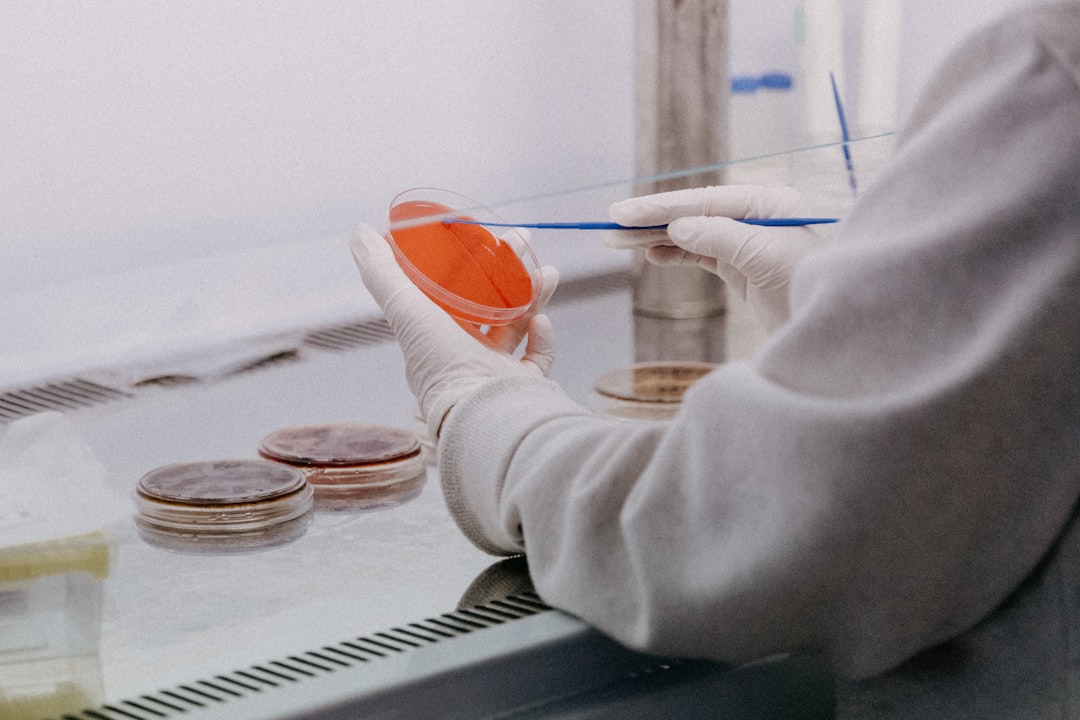
New scientific tools are making it easier to determine whether gelatin comes from cattle, pigs or fish — a development that could strengthen halal food authentication and help detect mislabeled or contaminated products.
Researchers have spent years trying to solve a difficult food-authentication problem: once collagen has been heavily processed into gelatin, identifying the original animal source can become much harder. In 2026, several studies and reviews highlighted newer approaches that may make that identification faster, more sensitive and potentially easier to use outside specialized laboratories.
A study made available online on June 5, 2026 proposed a label-free optical sensing system based on surface plasmon resonance (SPR). The researchers designed the sensor to distinguish between bovine gelatin, porcine gelatin and fish gelatin by measuring differences in their optical response.
The research, published in the Journal of Multidisciplinary Applied Natural Science, describes the technology as a possible route toward rapid halal verification because it does not require the sample to be chemically labelled before analysis. The authors also discuss the possibility of future portable or on-site testing systems.
Gelatin is produced by breaking down collagen from animal skin, bones and connective tissue. Heat, acid, enzymes and other processing steps can damage or remove much of the DNA that would normally make species identification straightforward.
That is why a package that simply says “gelatin” can be difficult for a consumer to evaluate. Even a package labelled “beef gelatin” relies heavily on the manufacturer’s supply-chain records unless an independent authentication or halal-certification system is involved.
A 2026 systematic review in Clinical Rheumatology examined analytical methods used to identify the animal source of collagen and gelatin. The review covered techniques including quantitative PCR, LC-MS/MS proteomics, ELISA and FTIR-based analysis.
qPCR can be highly effective when enough species-specific DNA remains in the material. The challenge is that extensive gelatin processing can break DNA into fragments that are too damaged for reliable amplification.
Mass-spectrometry methods can look for species-specific peptide markers instead. These methods may remain useful in highly processed gelatin where DNA-based identification becomes more difficult.
The review argues that no single method should automatically be treated as perfect for every product. In higher-stakes cases, combining independent methods can provide stronger confirmation.
Other recent research has shown how sensitive gelatin authentication can become. A peer-reviewed LC-MS/MS method published in 2025 reported detection of bovine and porcine gelatin adulteration down to approximately 0.01% in tested gelatin-containing products, with analysis completed within several hours.
That does not mean every food manufacturer or halal certifier is currently using these techniques. It does show, however, that laboratories increasingly have the ability to investigate gelatin origin at concentrations that would have been difficult to verify through ordinary ingredient inspection alone.
A laboratory may be able to confirm that a gelatin sample is bovine rather than porcine. That result does not prove that the cattle were slaughtered according to halal requirements, that the processing facility was halal-compliant or that cross-contamination controls were followed.
The Canadian Halal Bureau made this distinction in a July 2026 consumer explainer, noting that beef gelatin is considered halal only when the animal source, slaughter and processing satisfy the halal standard being followed. For ordinary consumers, recognized halal certification therefore remains important even as laboratory technology becomes more advanced.
Consumers will not be carrying laboratory sensors through grocery aisles anytime soon. For now, the practical approach remains to look for recognized halal certification, check whether the ingredient source is clearly identified and contact the manufacturer when a product lists only “gelatin.”
The Halal Food previously examined this issue in detail in our guide, What Is Beef Gelatin and Is It Always Halal? The new research adds another layer to that discussion: science is getting better at answering which animal?, while halal certification still has to answer how was it sourced and processed?